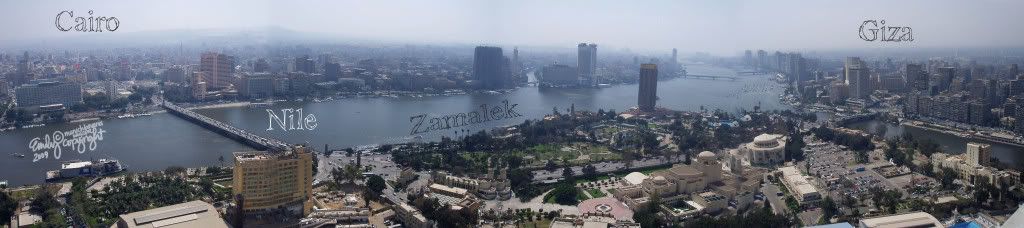
 We stayed on the island of Zamalek, which was highly recommended by friends. I wouldn't recommend our hotel (The Marriott Zamalek)... I know it's beautiful, but it's just too big.
 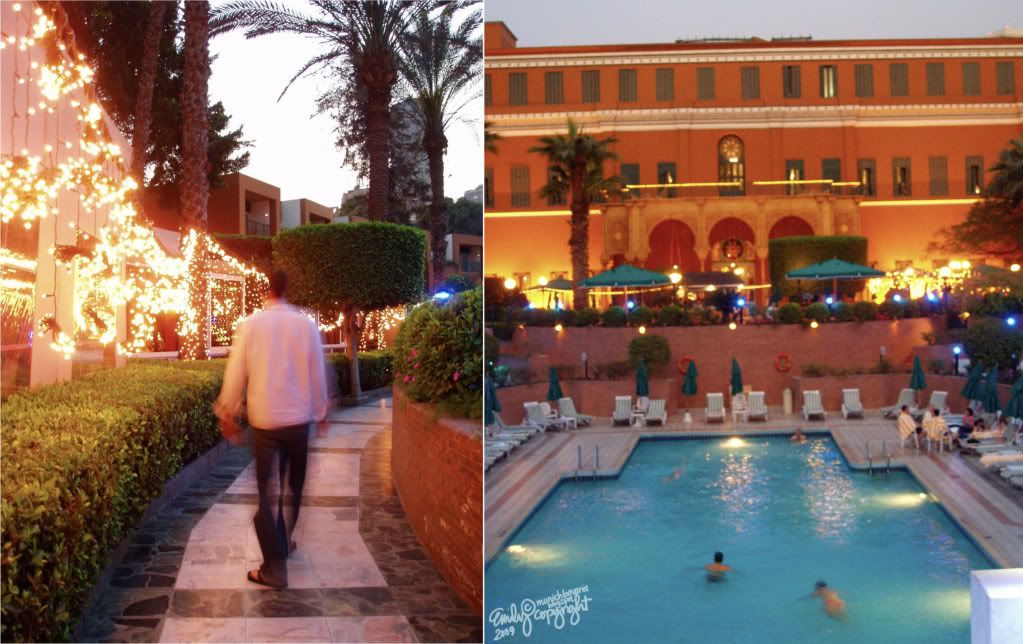 I have to admit it felt extremely decadent to stay at our hotel once we saw the surrounds. While we were at the Khan el-Khalili I overheard one of the tourist police ask Rani where we were staying. I don't know if that was a safety measure or just curiosity, but I'm certain people thought we had money as soon as they heard which hotel was ours.
 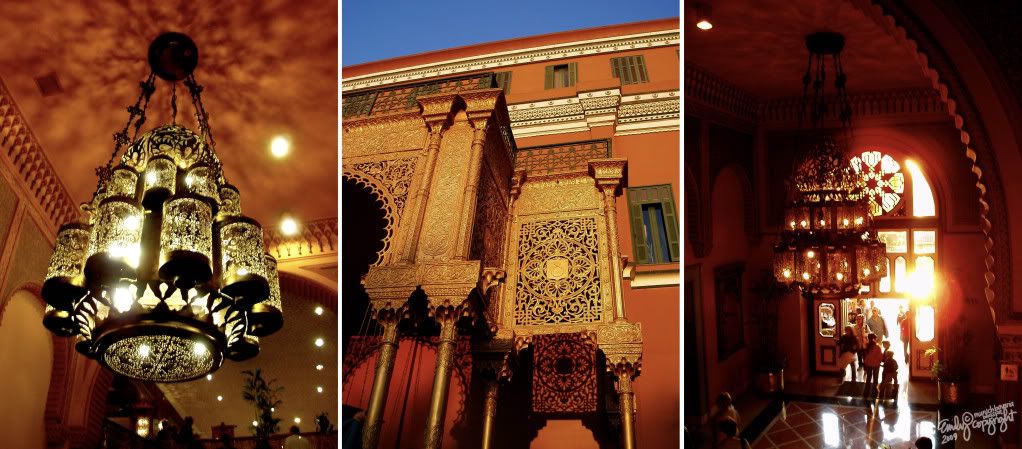 The only reason we stayed there was because we weren't entirely certain what we were getting into, and safety was key. However, after visiting I think a smaller hotel would be better - it's not such a display of excess, they would be more customer oriented, and I would feel as though our money was directly helping local business as opposed to this enormous chain.
 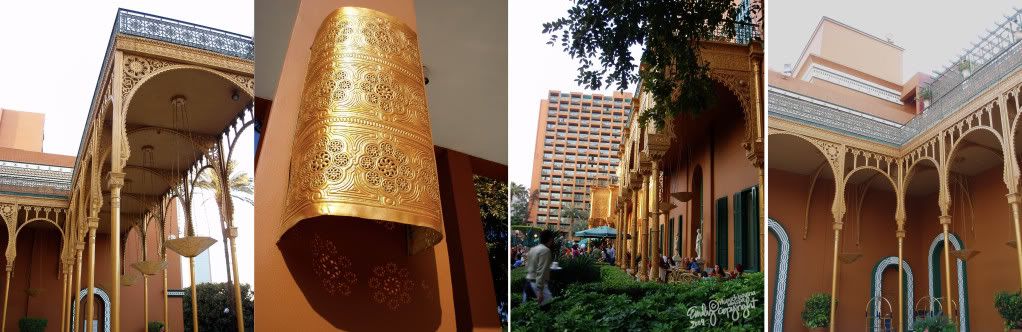 As for the positives, there were so many pretty details that I appreciated whenever I passed by. The lights and the metal work were particularly beautiful. I'm also a big fan of Moorish architecture, so those little elements definitely didn't go unnoticed.
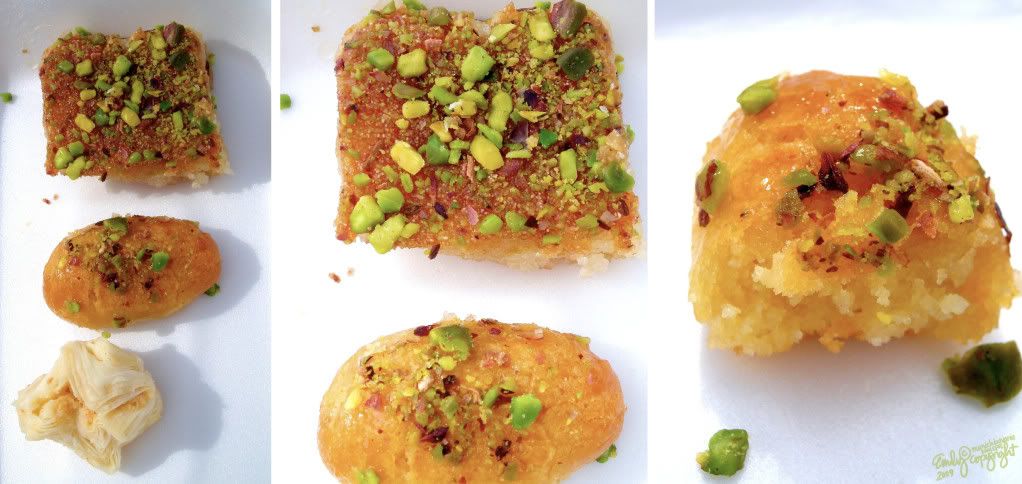 One thing I did absolutely loved (besides the palatial architecture) was the Bakery with Egyptian pastries. Most of them were sweetened with honey and coconut, but they were so very delicious. It's probably a good thing I can't find too many recipes to try, but believe me - I'm still looking!
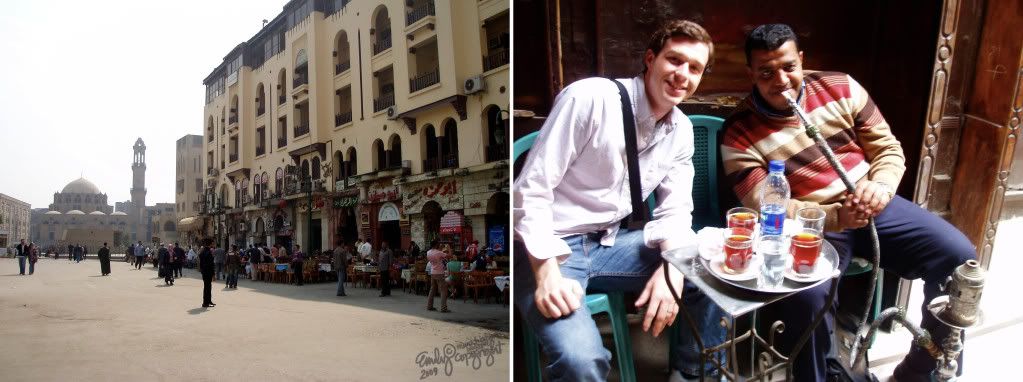
 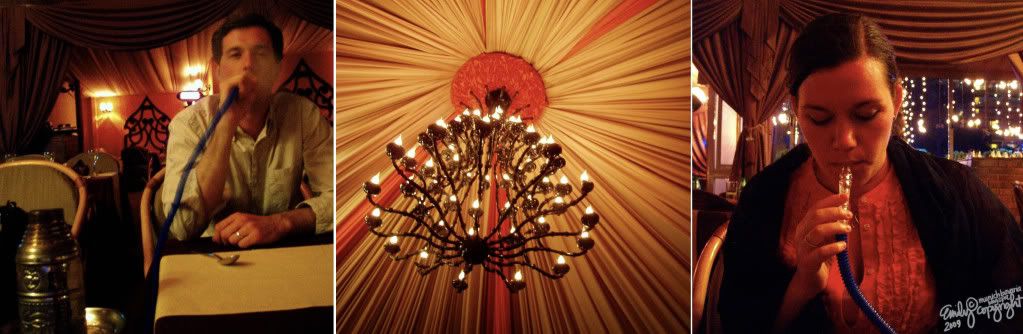 While in Zamalek we also tried the shisha, which is typically a flavored tobacco. I really hate smoking and everything to do with it, but so many people told us to try it when we were there. Then my paranoia kicked in after I read about being cautious since it's a way tuberculosis can be spread.
 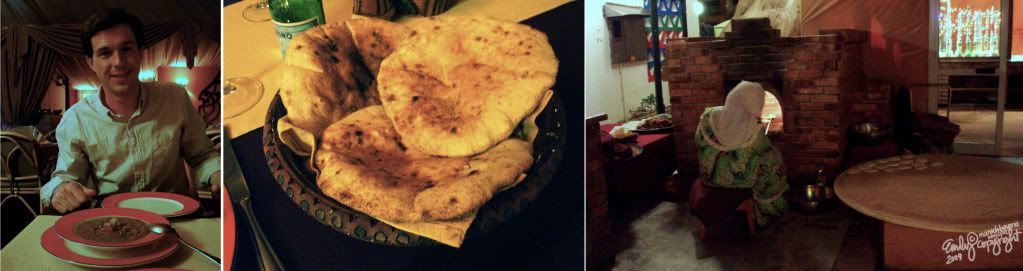 Fortunately we could try it with a brand new tube, which was opened in front of us. It doesn't have a smokey smell - it's closer to incense, which is the only reason I decided to take a couple puffs from Stefan's Apple shisha. We decided to try it with our Egyptian dinner, which unfortunately wasn't super unique. I told Rani the falafel that he bought for us was better than our dinner - I don't even want to know what the price difference was. The best parts of the dinner were the 'foul medammes' and the baladi bread.
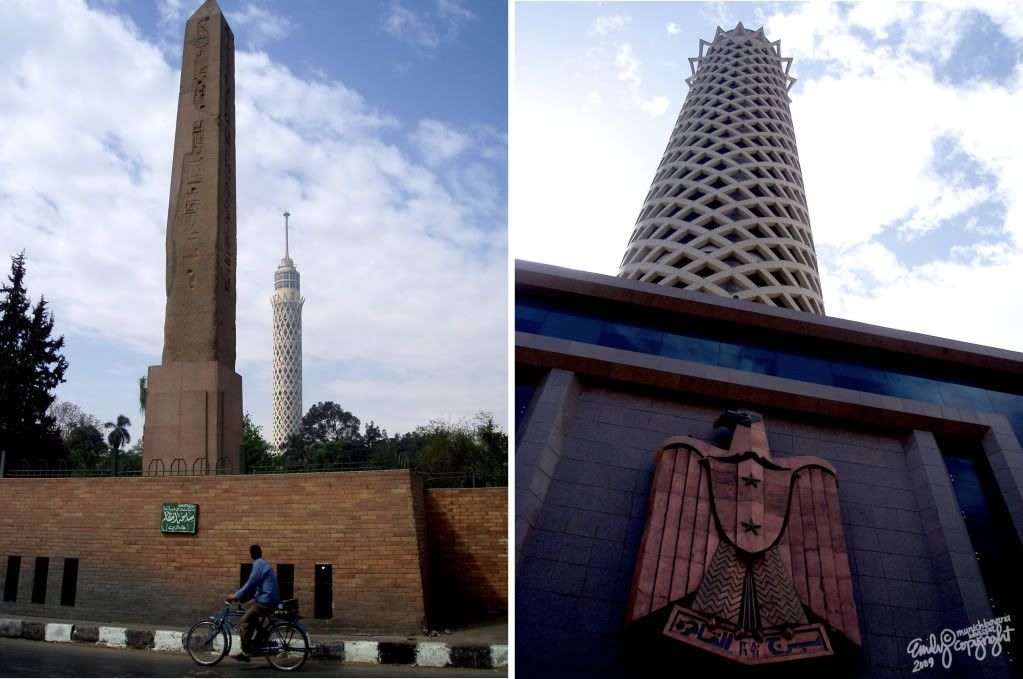 Zamalek also has the Cairo tower, which is the main tourist attraction on the island. It took us a little bit of effort to get to the Tower, because we were wandering around, but we saw so many things during our walk.
  The view is really beautiful and you can slightly make out the Giza pyramids in the hazy distance. Again, the smog is very noticeable when you're so high above the rest of the city.
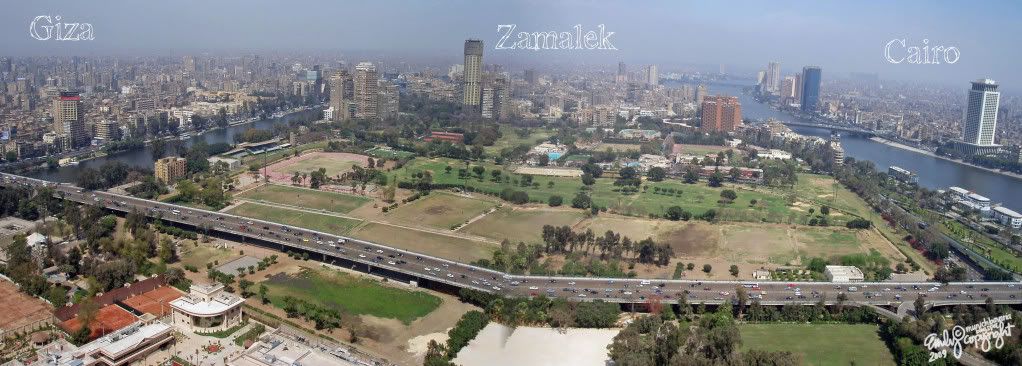 It's very startling to see how congested things are, and then there's Zamalek with ample sports fields and the most green grass and trees in sight for a long long way.
 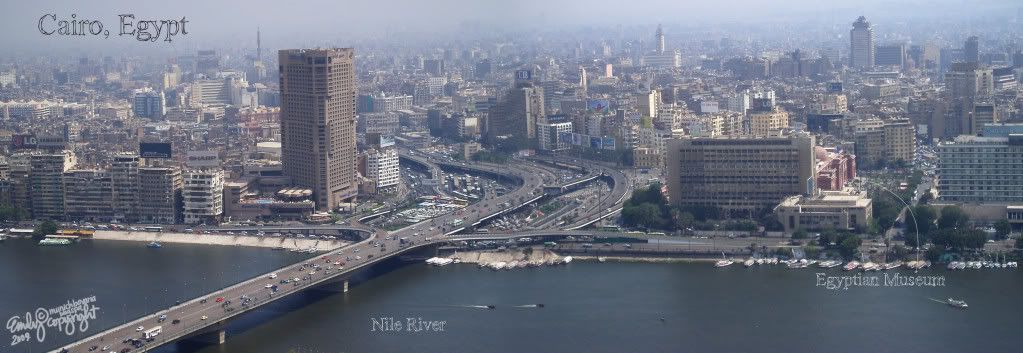 I always love reorienting myself with a nice view over they city. From the tower we could not only see the pyramids, but also the much closer Egyptian Museum and the Citadel area.
 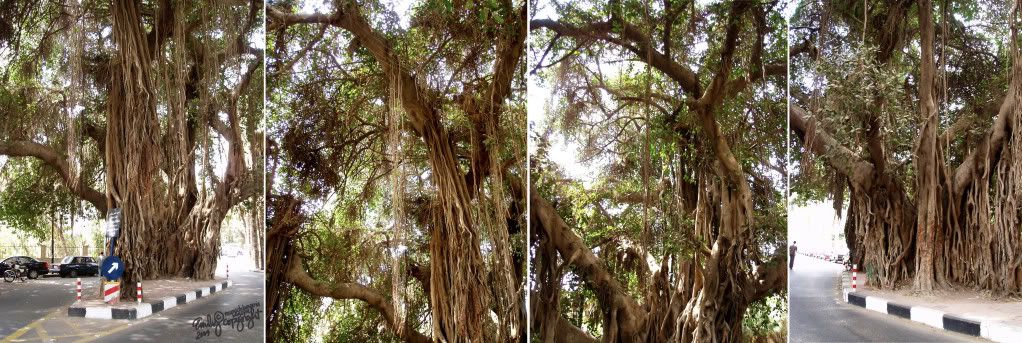 As we were leaving the Cairo Tower we spotted the most beautiful tree. I would love to know the history behind it and how old it is, because it's so beautiful and ancient looking. I loved that someone else also valued it, because the road was built around it.
 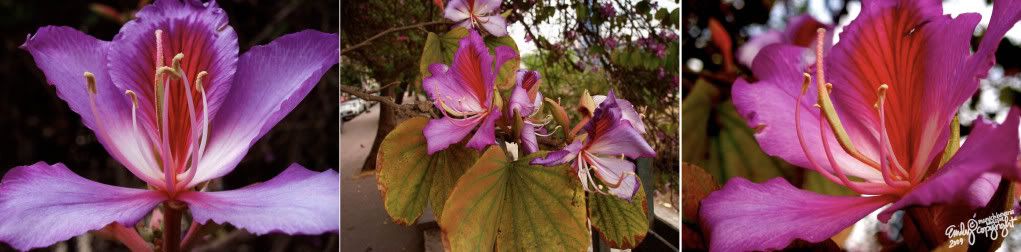 I also admired the flowers growing on the trees. The bright contrast and colors from nature and life are very welcomed amidst the neutral browns that seem to be painted across Cairo - from the desert to the buildings there isn't a lot of color and vibrance. With such a struggle to live, I'm not sure how much time there is to appreciate something as simple as color or nature, but I warmly welcomed it even after only a couple days.
Thursday, March 26, 2009
Zamalek - الزمالك

Wednesday, March 25, 2009
Khan el-Khalili - خان الخليلي
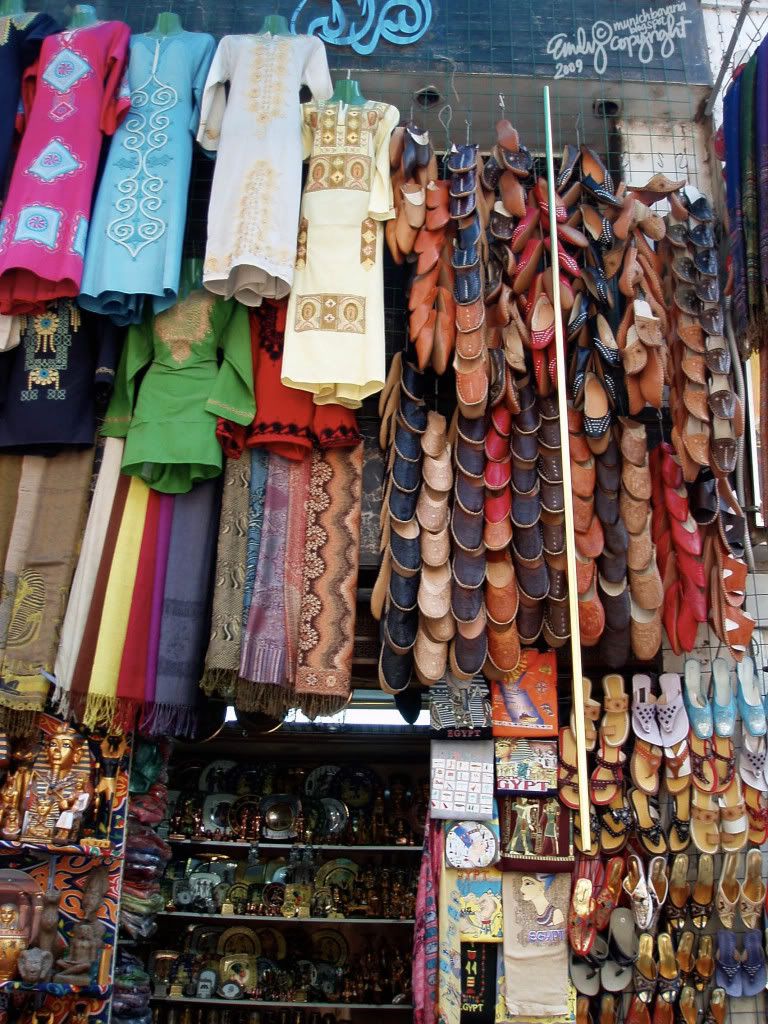 This is one of the main tourist stops in Cairo. There is a lot of action going on at this souk with plenty of interesting to things to stop and look at, particularly if you don't mind haggling.
On our way to the market Rani warned us that the shop workers were good. He said they would take one look at us and know where we were from, as well as speak our language. I told him we'd have to give them a hard time and say we came from Iceland.
As soon as we walked down one of the busier streets someone greeted me with a 'Hey Signora/Señora' - I don't know if they thought I was Italian or Spanish. Rani told me they must be just learning. Later I got a good laugh out of a woman saying with the biggest American accent 'Hi how are you doing?' 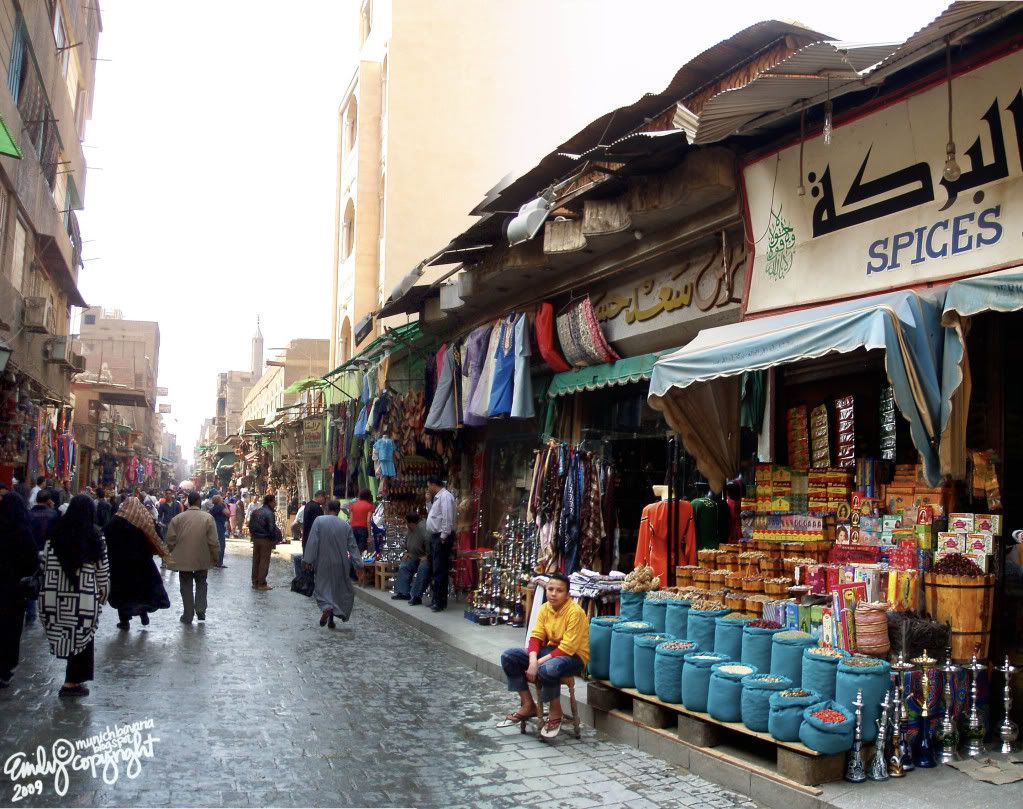 I would have really loved to spend more time at there. I saw so many beautiful things - from tunics and leather shoes to beautiful jewelry from semi-precious stones. There is also a beautiful and extensive spice market.
I don't mind the action of people trying to get business and keep things exciting. I realize some people find this intimidating or irritating, but I think it adds to the ambiance. 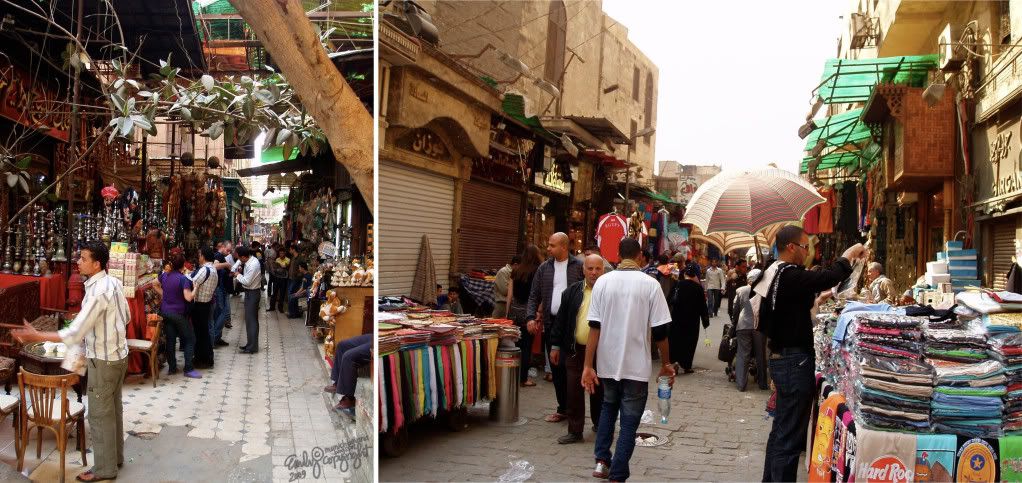 Not all of the market was hustling and bustling. There were quieter side streets and alleys. The winding narrow streets are very beautiful and several have gates from the middle ages.
 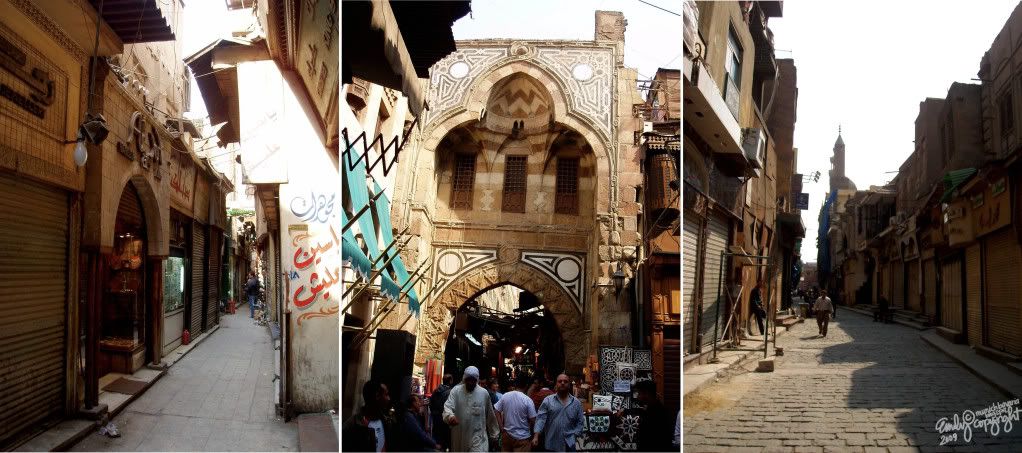 Different areas of the market serve different purposes, so you don't have to walk very far to find a large variety of cottons, souvenirs, or jewelry. We came for a little bit of shopping and also for lunch.
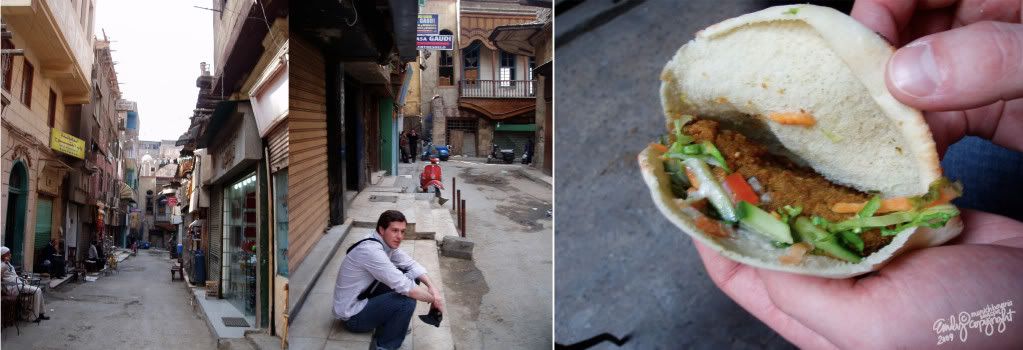 Rani bought us some falafels down a quiet side street. The only action was a few men smoking shisha and a few stray cats waiting around for discarded lunches. I never would have ventured there on my own and yet sitting in one of the shady side streets and sharing tea and falafels while Rani smoked some shisha was simply wonderful.
  I'm also willing to bet I will never have a falafel that was so delicious in my life. One was only falafel with some vegetables, while the other had a bit of baba ganoush added to it. Both were more delicious and substantially cheaper than the Egyptian meal we had the night before.
I expressed some interest in getting a traditional galabeya / galabia gown after I saw one near the Coptic area that I liked. I love tunics in general, although I tend to go for plain ones, but I thought it would be nice to have something conservative to wear during future Mid-East visits.
We walked down the street and then I saw a shop that sold a variety of traditional clothes. I asked about a light gray galabeya and was told they were for men. So much for simplicity! He continued to pull out a variety of options and finally I saw one that looked simple enough, but was fit for a woman. Of course the one I chose was handmade, so it was more expensive, but still incredibly reasonable. 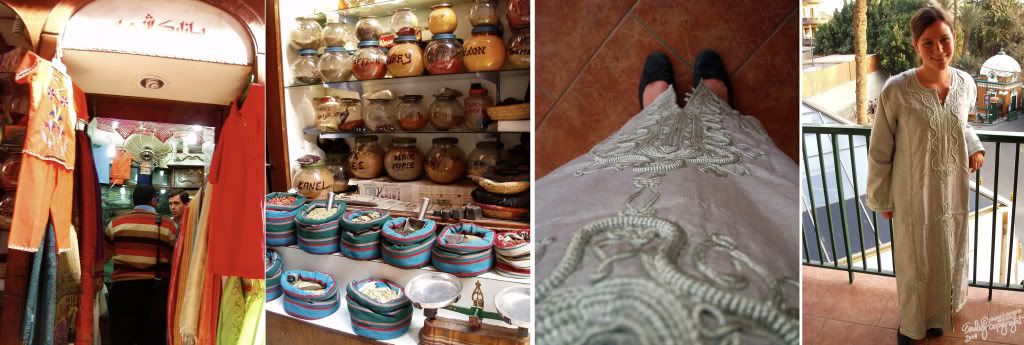 As I went to change Stefan and Rani began haggling. Initially the man wanted 300 LE, however Rani was helping Stefan barter. I laughed as the man told Stefan 'don't listen to him, this is between us!' After agreeing on 225 LE (less than 30€) Rani told us that you tend to get something free after you buy and that we should get something else with it.
Outside this shop was a spice display and Stefan said 'how about some spices outside?' Stefan or Rani suggested some saffron and then we learned the man that owned the tunic shop didn't even own the spice shop! The spice shop owner quickly appeared and he exchanged a few words with the man we had bought the dress from and then he gave us a small bag of saffron. 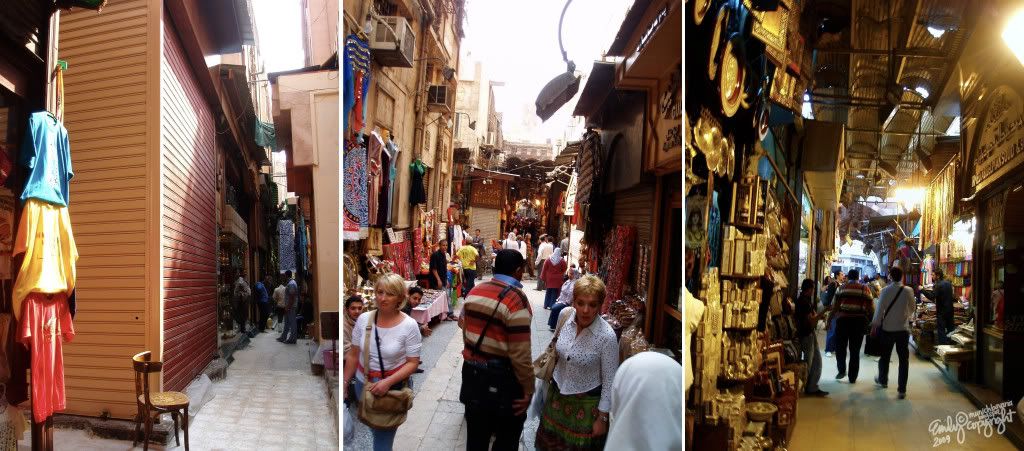 The only unfortunate aspect of the 'Khan' is that it's been a target for attacks, the most recent happening in February 2009 in the open plaza near the Al-Hussein Mosque.
 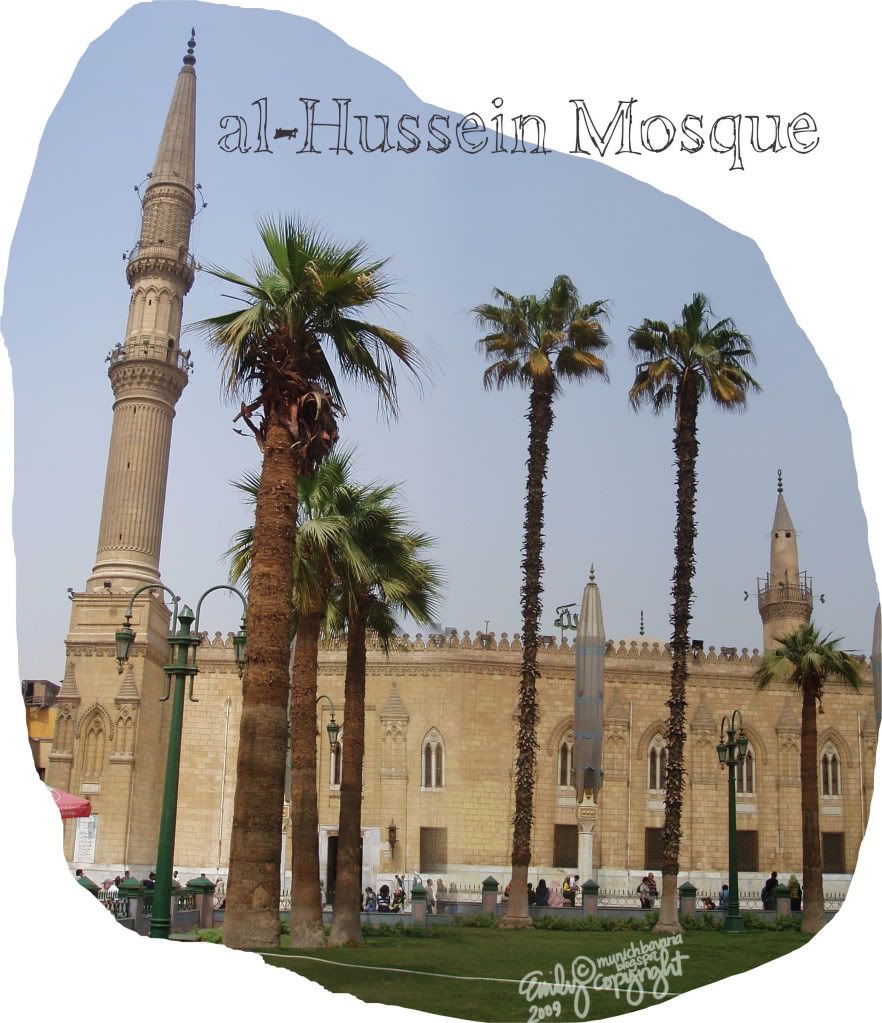 On one street there were tourist police and they wanted to look in Stefan and Rani's bags. I offered to open mine and he kept saying 'no' and waving me through. Another tourist police said 'hebebe (sweetie) where are you from?' to me, which really surprised me, particularly because I was with men. I don't know what traveling here as a single woman would be like.
This is the largest souk in Egypt and it dates back to the 1380's, so I definitely think it's worth a visit. All of our friends that have lived there recommended that we check it out and I'm glad that we did. Rani said it's great to hang out there at night and then added around 2AM. I didn't realize they stayed up so late!
I'm looking forward to wearing my galabia on future trips. I've really wanted to get to Morocco, so hopefully we'll get to go sometime soon!
Tuesday, March 24, 2009
Cairo - القاهرة
We woke up early to explore Cairo city -as well as visit to several of the religious sites, a souk, and the Egyptian Museum. Cairo is occasionally called "the city of a thousand minarets", because everywhere you are it seems a mosque is not far away. One thing I appreciate anywhere I travel is the attention and detail that was once paid to places of worship. The intricate patterns and textures are inviting and beg to be looked at more closely.
 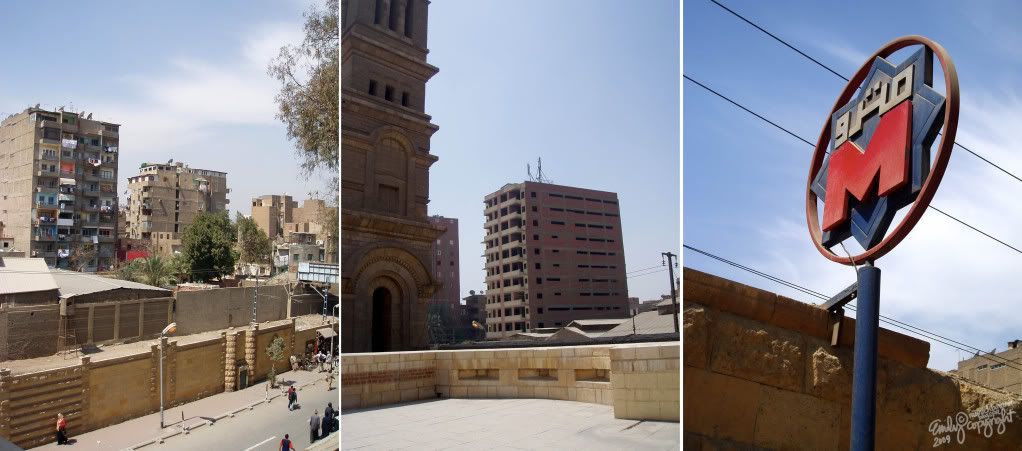 Another interesting feature is that buildings that are unfinished are not subject to the same tax laws, therefore many of the buildings appear to be continually having something done.
 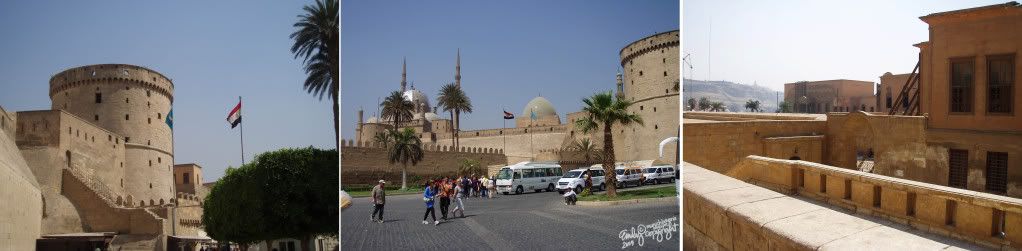 Our first stop was The Citadel, which sits perched on a large hill overlooking the city. Typically the highest hills or view points in any city end up also being the center for government, which was also housed here for sometime.
 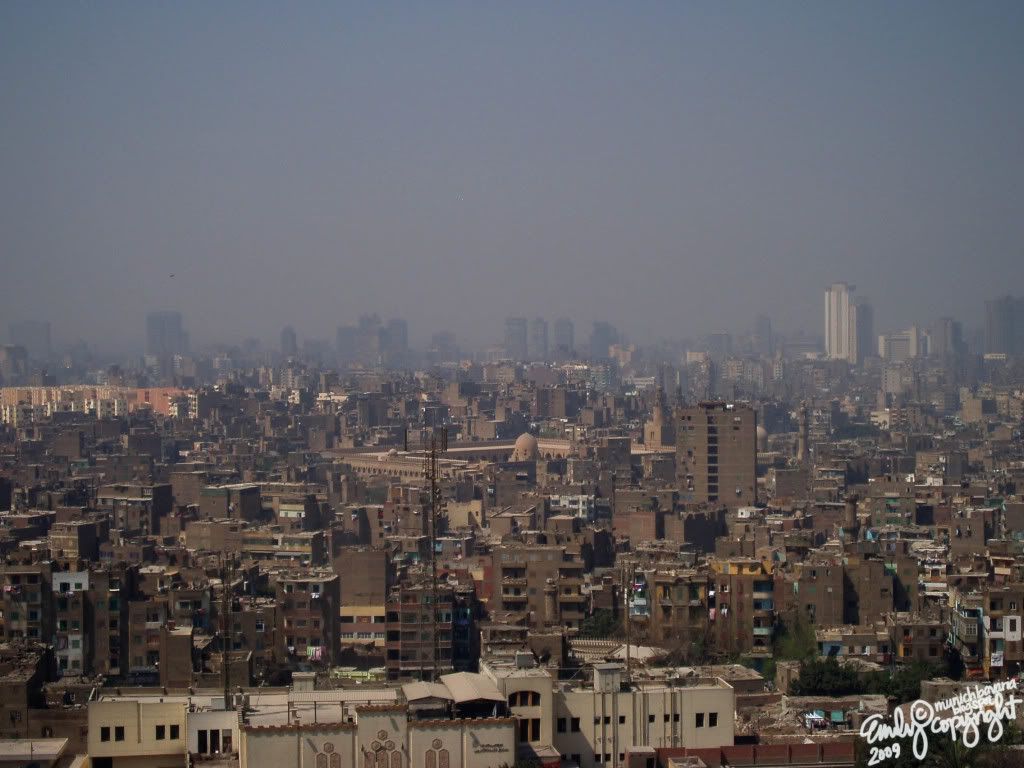 The main features of the Citadel are the The Alabaster Mosque at the Citadel of Salah el-Din and the striking view over the city and into Giza. The mosque was supposedly built here due to the air quality. Salah el-Din is said to have hung meat around the city at various places and it took longest to spoil in this location. Judging from the smog below I would have to believe the air quality throughout the city has not improved.
I quickly understood why the smog is wrecking havoc on the ancient monuments as well as people's health, but thankfully we were distracted by the sights to concentrate too much on the air quality.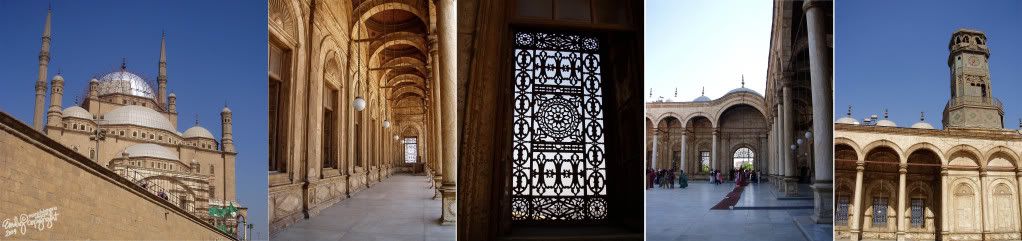 The Alabaster Mosque is truly beautiful. While we were there the dome was being restored with silver leafing. The Ottoman style architecture is also unique. The other mosques in the city do not have the same appearance. To enter the mosque you are required to take your shoes off, or get shoe coverings, and as a woman to put a head scarf on out of respect. I enjoyed feeling the cold stone under my feet as I tried to better understand this fascinating faith and beautiful architecture.
 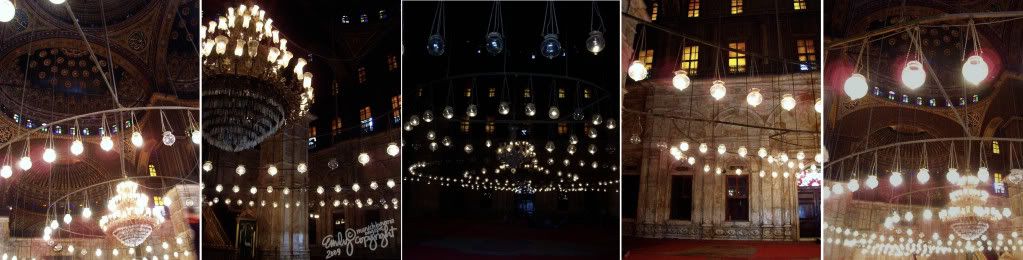 It was nice to be invited into a sacred place and to have Rani answer our questions about his faith and religion. We took a seat on the bright colored carpets as he explained the details of the prayer room to us. Islamic churches do not have icons, therefore you will not see images of prophets or people decorating the sacred space.
 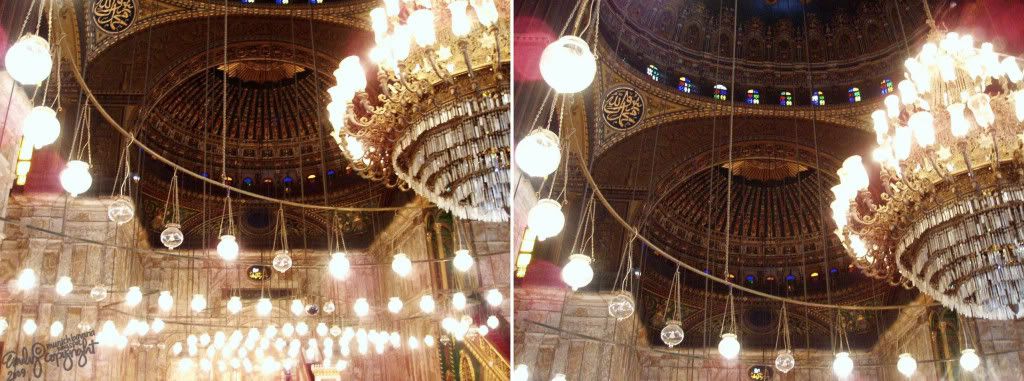 The call to prayer (Adhān) is really pretty special. In ancient times a man with a resonating voice would be 'the caller' and announce to everyone that it was prayer time. Different areas of the middle east follow different calls and the same thing is not always said in each country or each denomination (Sunni and Shia). In Egypt, Sunni is the most practiced form of Islam.
Before going to prayer a cleansing ritual is required and it follows a particular order moving from right to left and is done three times. It consists of washing the hands, mouth, nose, face, arms, forehead and hair, ears and finally the feet. 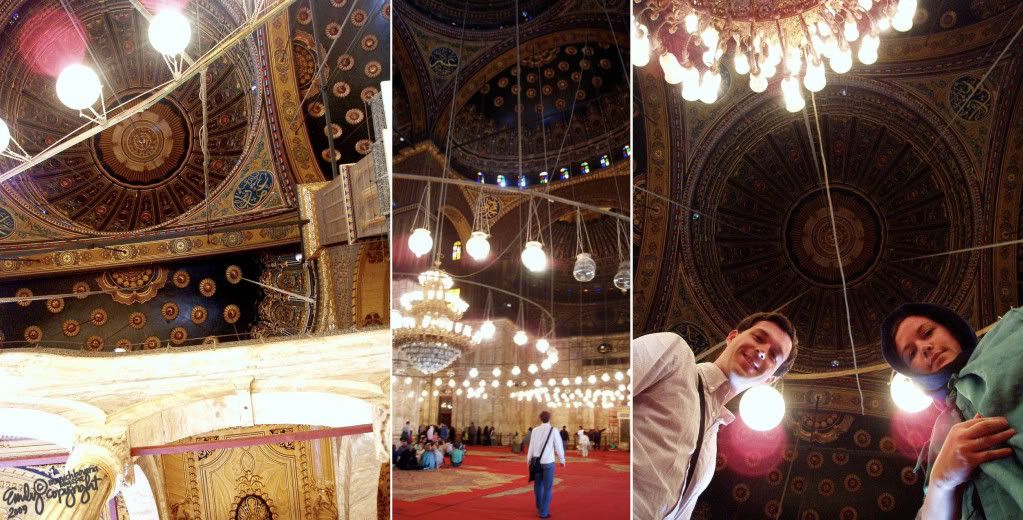 Just like other religions, some people are more devout than others, however answering the call to prayer at the proper times is supposed to gain favor in God's eyes. If someone misses prayer time they can pray on their own. Driving down the heavily congested roads I noticed a Qur'an in nearly everyone's window.
The 5 pillars of Islam include:
Shahadah - declaration of one God. This is written inside the mosque and also part of the call to prayer.
Salah - ritual prayer. This is required 5 times a day (dawn, noon, afternoon, sunset, nightfall)
Zakat - alms giving from the rich to the poor
Sawm - fasting during Ramadan
Hajj - pilgrimage to Mecca
During Ramadan and fasting Rani explained there would be tables of food lining the streets and this was part of giving alms. I asked if he had been able to make his hajj (pilgrimage to Mecca), which costs between $5,000 and $10,000, but he's still working towards that. 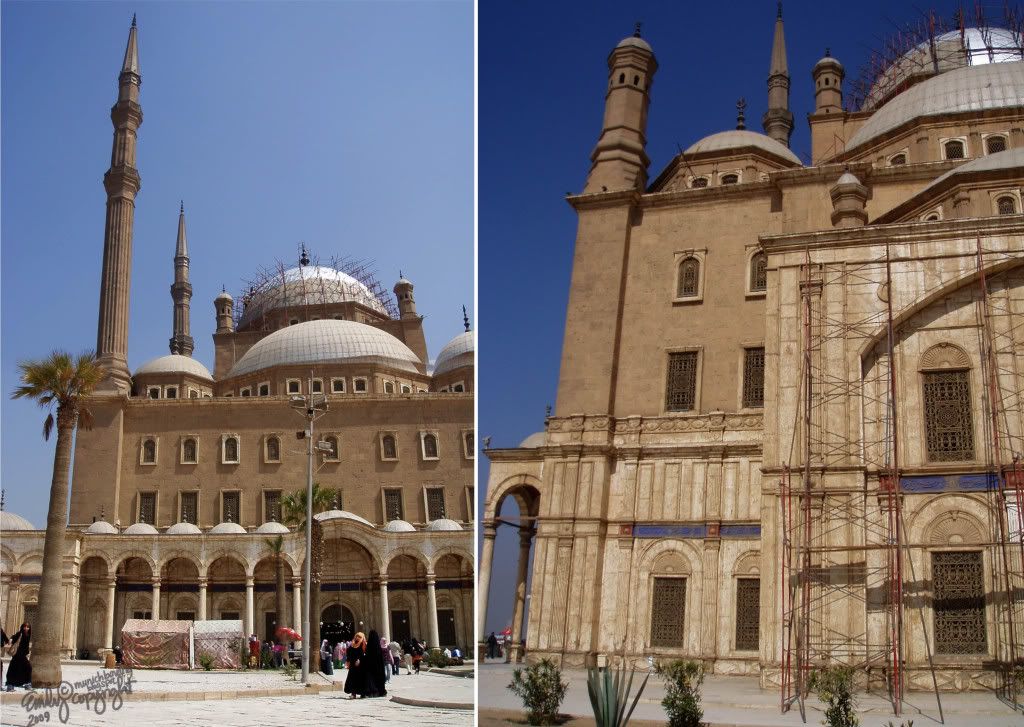 Prayer is always directed towards Mecca. I'm not really certain how they always know which direction Mecca is, however I did once see a man open a muṣalla prayer mat in Marienplatz and begin praying here in Munich.
As we talked with Rani about his new marriage and his life, we quickly understood things more clearly. Some things are still strange to me, coming from a Western culture (such as being able to marry 4 women), while other things I already knew (Jesus was viewed as a prophet, however they view the Holy Trinity to be polytheism). 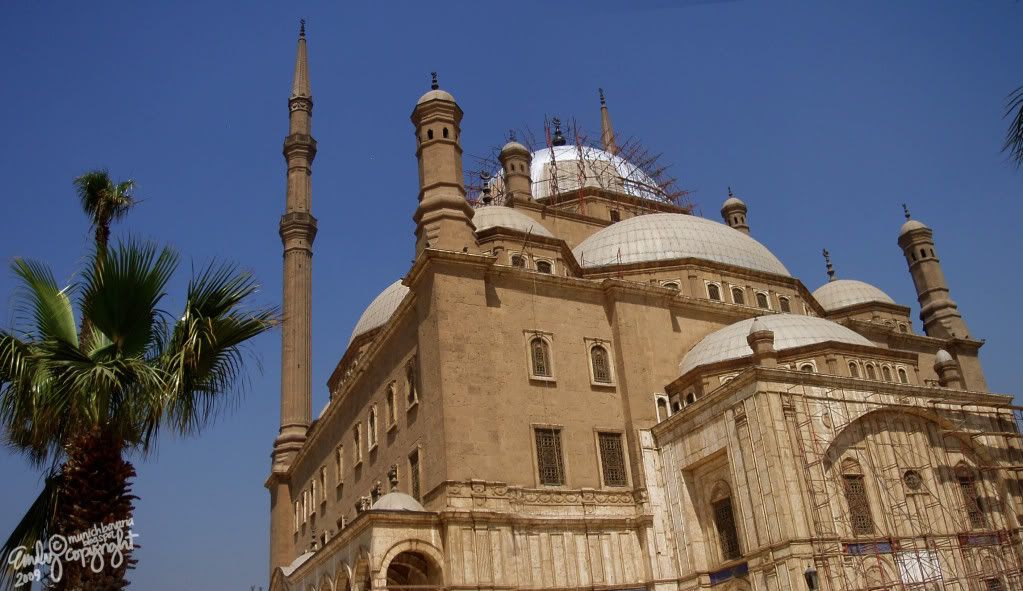 We also discussed divorce, which is very common in Egypt. He told us he went broke from getting married. He was required to provide (and he continually stressed this) proper furnishings - including curtains, carpets, and furniture. If he were to take another wife his current wife would have to agree to it. If the woman had previously been divorced he would not have to offer as much. He said this was not as common as it once was, I assume due to the rising economic costs. His father had a second wife (which he called his step-mother) and for some time they lived in the same house, however they later had two separate households.
Women are also able to divorce men, however in doing so she renounces any say on their belongings. Lower and Upper Egypt differ as well. In Upper Egypt it sounds as though it's not as traditional and women would be able to help pay for a wedding, while in Lower Egypt that was considered shameful for a man.
Stefan asked about the veiling of women and whether the woman in full burkas were more devout. Rani told us it depends on her upbringing and what is agreed upon by her husband. He suggested that some women don't veil at all (most likely the women living in Western areas, such as the US). I recently read that many Islamic women in the middle east are suffering from vitamin D deficiencies due to their hijab and being covered except for hands, feet, and occasionally face.
In contrast, Egyptian men can display their piety by having a 'zebibah' or dark mark on their foreheads from hard pressing into the carpets during prayer. It's worn as a badge of honor and I saw several men with darkened foreheads through our trip. 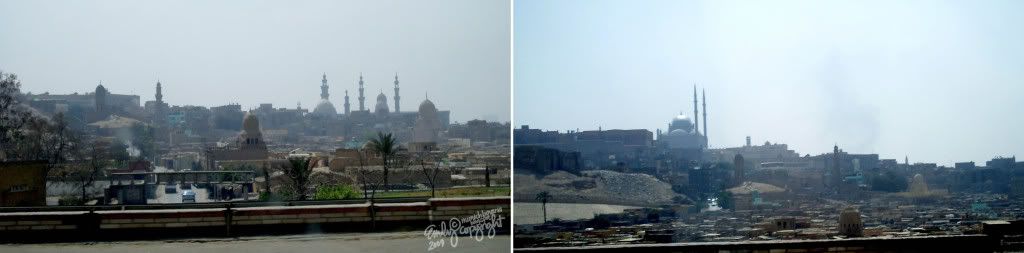 After leaving the Mosque we drove past the City of the Dead, which intrigues me. We did not stop and Rani stated that the tourist board discourages tourists from visiting, perhaps because they don't like to publicize some 500,000 people that live amongst the graves. I don't think I would have even realized that it was a graveyard because it looked so different from the graveyards that I am familiar with.
 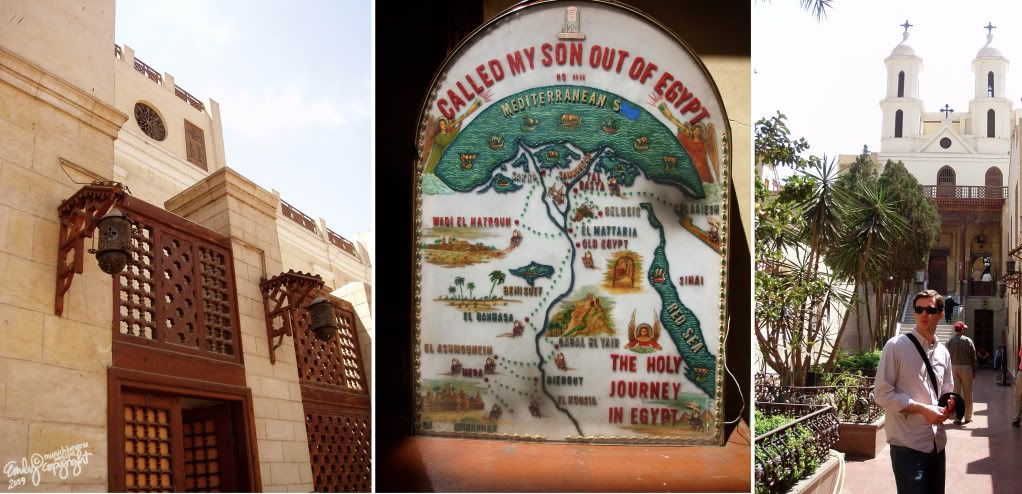 We visited Coptic Cairo, which is the Christian area of town. The tourist police stopped Rani and wanted to see identification, which quickly became common place for him. The area is not very large and the churches are very compact. Stefan and I were impressed with Rani's knowledge about other religions.
 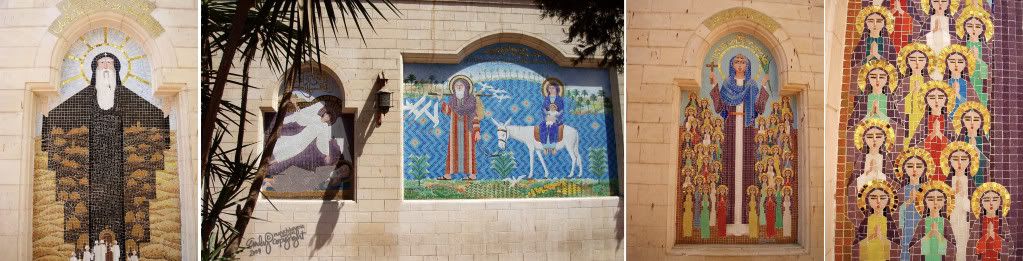 As we visited The Hanging Church he helped clarify some of the things we saw among the 'Copts' as he called them. We arrived not long after a mass and I had to remind myself that it was Sunday.
 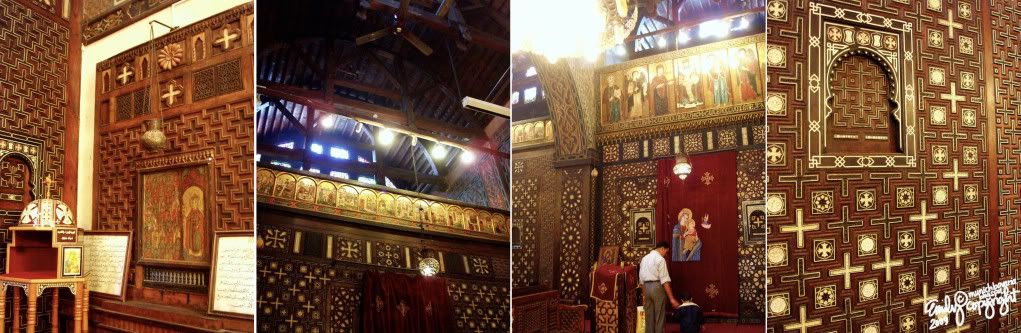 Immediately I noticed the smell of incense. The walls were covered with intricate details and many of the parishioners were walking up and touching or kissing everything in sight, which was odd, but in their eyes it helps gain blessings from various saints. The ceiling of this church was based off Noah's Ark, therefore it looks like an upside down boat.
 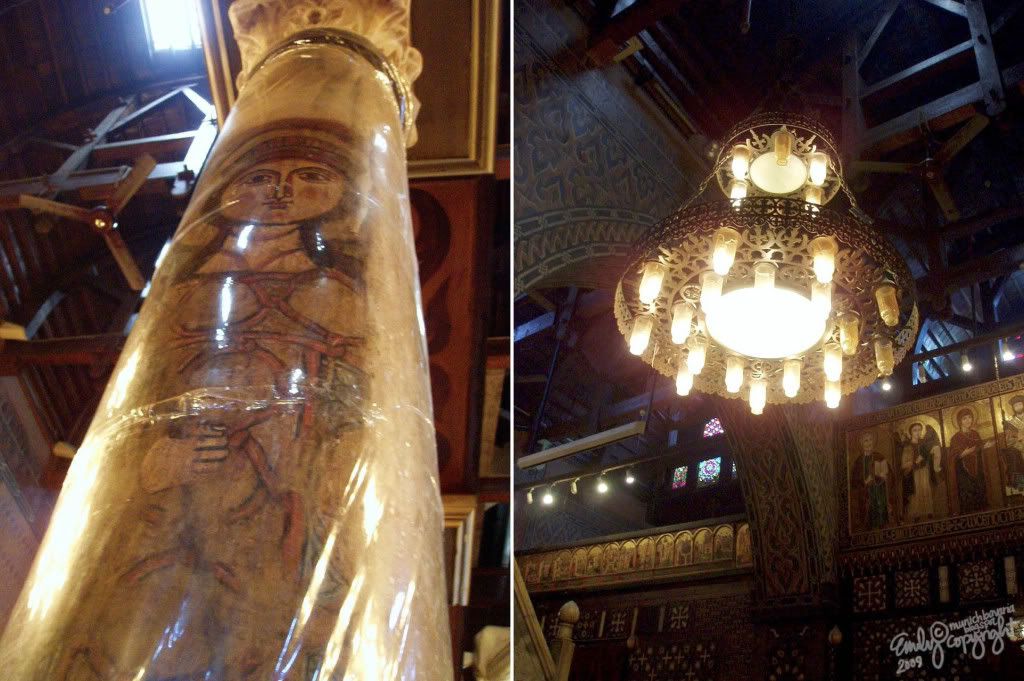 The church is dedicated to the Virgin Mary, who is said to have passed through this area during The Holy Family exodus through Egypt. Supposedly a miracle also occurred and the Virgin's image appeared on a pillar in the church.
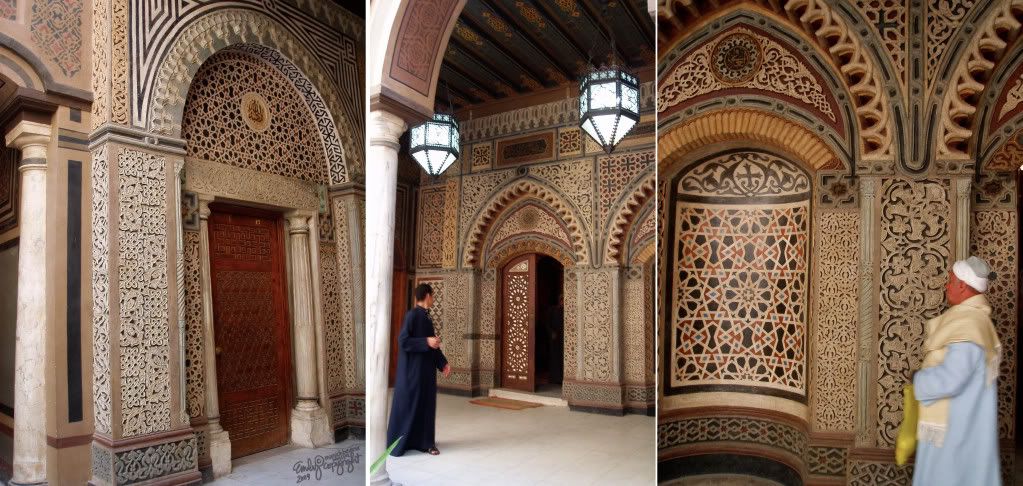 Many of the men had very tanned and beautiful faces with long cotton gowns. They were very striking and their faces seemed to tell so many stories. The entire area exudes so much beauty even through the struggles.
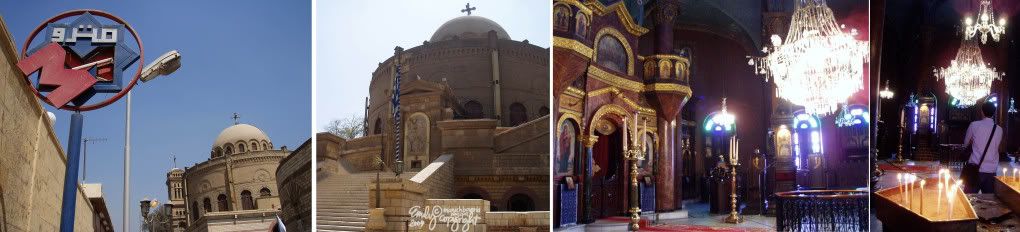 The next church we visited was St. George, which is a Greek Orthodox church. Much of the church has been rebuilt, but it is still striking.
After touring around the Coptic area we made our final stop at the Ben Ezra Synagogue, which was tucked away in a very beautiful area. It realy felt like we were walking through history. Rani compared it to old Jerusalem, however we haven't been able to visit yet for a comparison. There are no longer many Jews in Cairo or Egypt in general, so the synagogue remains Jewish property, but it's not fully functioning.  The image in the middle is supposed to be the well that baby Moses was found at. We also went to the crypt where the Holy Family stayed, but it has been extensively damaged due to rising water, which is a major problem in this area. Unfortunately, once again, photos were not allowed.
I saw so many things at the near by shops - beautiful lanterns, old antique cameras, and subtle tunics and clothing. We saved our quick shopping trip for the Khan el-Khalili, the famed souk of Cairo. 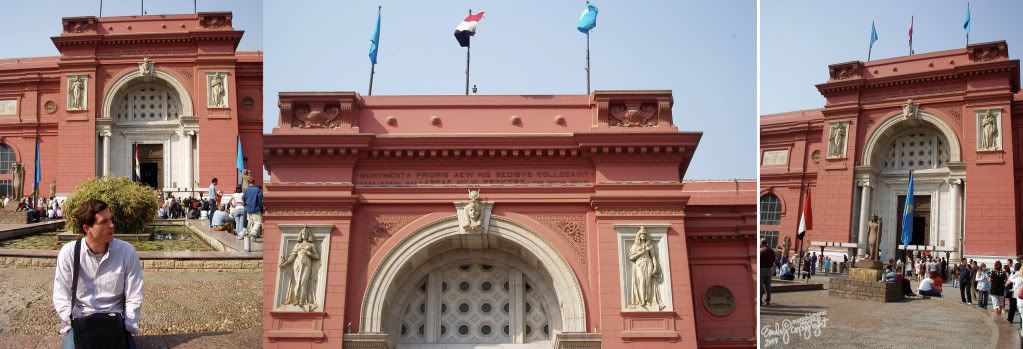 In the Egyptian museum I was surprised to find there is no air conditioner and many of the items had interesting labels that looked as though someone simply typed them on on a typewriter and placed them near the objects. My favorite label was near the replica Rosetta Stone and instead of saying 'The Greeks' it said 'The Geeks'. There are over 165,000 objects in this museum and it's definitely outgrowing it's confines.
I had to check my camera, so there are no photos of the interior, but I can safely say it is a very impressive museum with a very extensive and priceless collection. We saw King Tut's death mask and his many tombs.
We also saw the animal mummy room. It seems as anything living could be mummified - from dogs and alligators to fish and birds.
The history is so immense and I continually found myself questioning how much progress people really have made over the last four and a half thousand years.
Monday, March 23, 2009
Giza - الجيزة
The pyramids at Giza are striking. It's interesting because they are much closer to the city and civilization than one would expect. They are also paradoxically larger and smaller than expected.  Personally, I enjoyed Saqqara more, but perhaps that was because it was the first pyramid I saw that made me think to myself 'I'm really in Egypt'. There were more tour buses at The Great Pyramid Complex - and of course more people.
 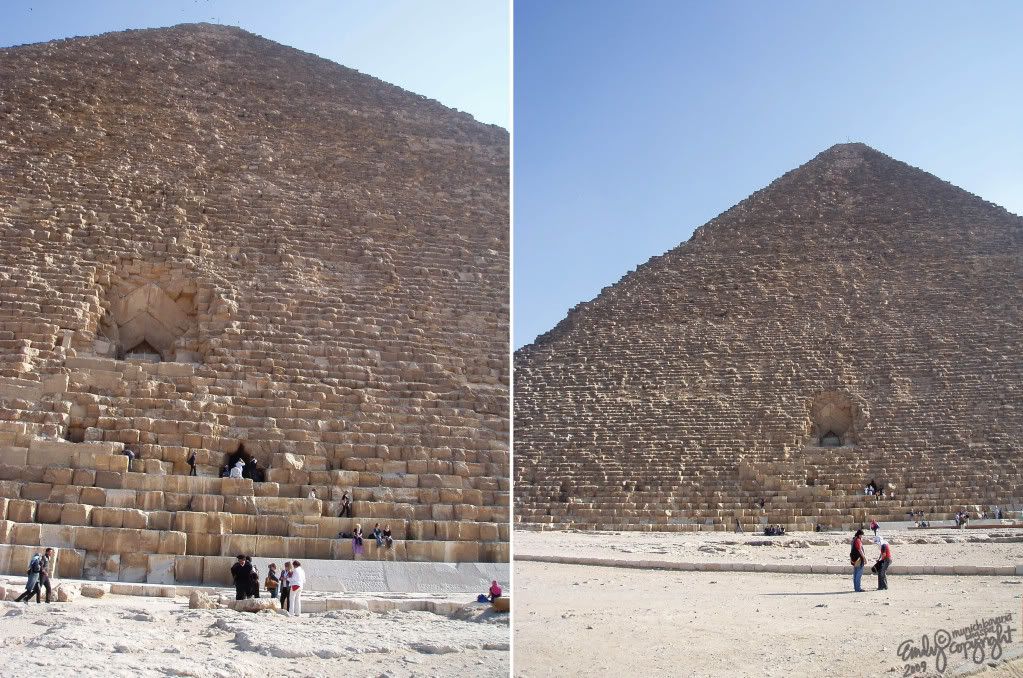 I didn't expect the exterior to be so craggy. In it's prime it was covered with casing stones made of white limestone, most of which are no longer there (you can see what's remaining towards the bottom of the pyramid). Archeologists suggest the pyramids would have a sheen to them from the sunlight glowing off the façade. I'm sure that was quite a sight!
 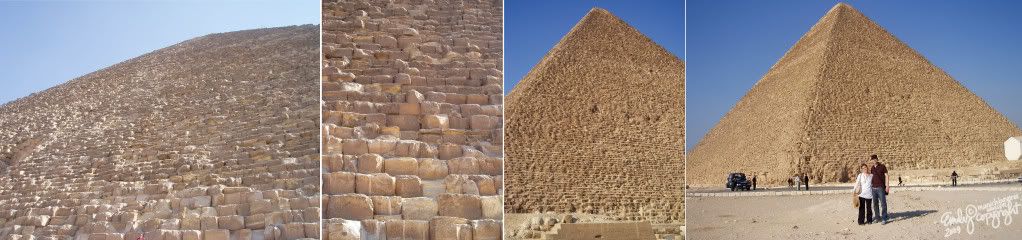 The Khufu (Cheops in Greek) Pyramid is the last remaining of the original Seven Wonders of the World. It was constructed over a 20 year period around 2560 BC. It remains the largest, despite the fact the Pyramid of Khafre appears larger, due to its placement on the plateau.
  Rani took a few photos of us from different perspectives while we stood on the pyramid. They help to give some perspective to how big each boulder truly is. A common misnomer is that the pyramid were built using slave labor. While I am sure the days of hauling, measuring, and cutting these enormous stones was a grueling task, Rani told us that it was more of an honor to be involved in building something so grand, and for the King no less. It does make a lot of sense that the people would have to work together in order for the pieces to fit so perfectly and really stand as a test of time.
 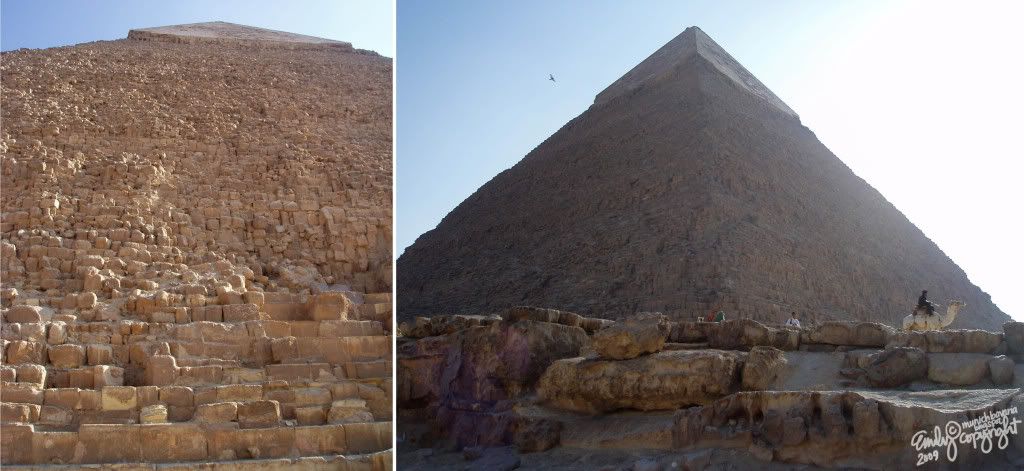 We paid an extra 30 LE to go inside the Pyramid of Khafre, which was not overly exciting. First, we had to hunch down and walk into serious dank humidity. There really wasn't much to see besides a painted inscription on the wall and a sarcophagus.
  We weren't allowed to take our camera in, however Rani took a few photos of us as we were exiting. For once the midday sun felt rather cool. I couldn't stop thinking about the grave robbers and how much they must have really been after treasure. Many of the graves were robbed eons ago. Some of the mummies were desecrated by being stolen and boiled and later used for medicinal purposes.
The bodies were meant to be preserved and used in the afterlife, along with everything else they might possible need, including various beds, chairs, amulets, and even their organs.
Going inside was not for the faint of heart. We also understood more clearly why people would believe in a curse, considering several men died after entering the pyramids, not long after they were discovered. Even thousands of years later the air down there is not the best.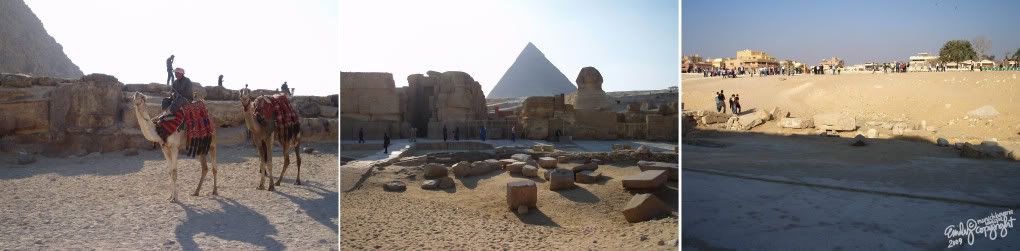 Surprisingly the photo on the right depicts what used to be a bank of the Nile River. Now the Nile is not even in sight because it has substantially receded. You can see a bit of Giza in the background - it's so very close.
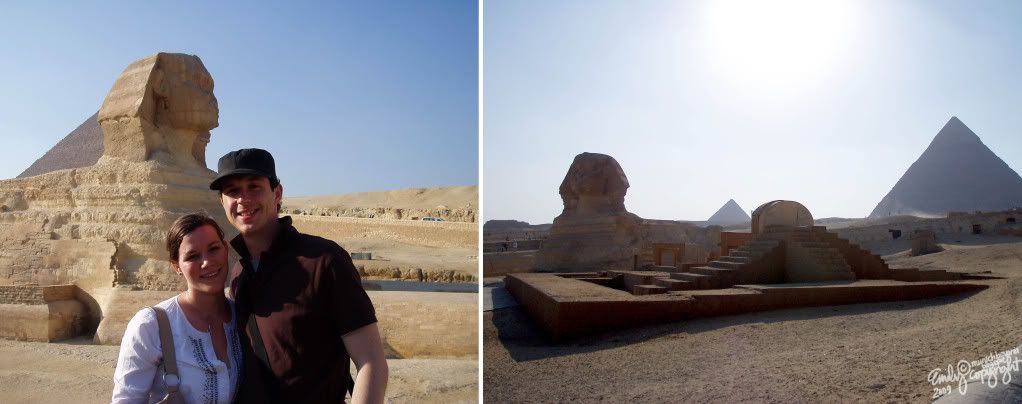 We went from the pyramids down to the Sphinx and the temple valley. There were many tourists, as well as what appeared to be locals - presumably celebrating Mother's Day.
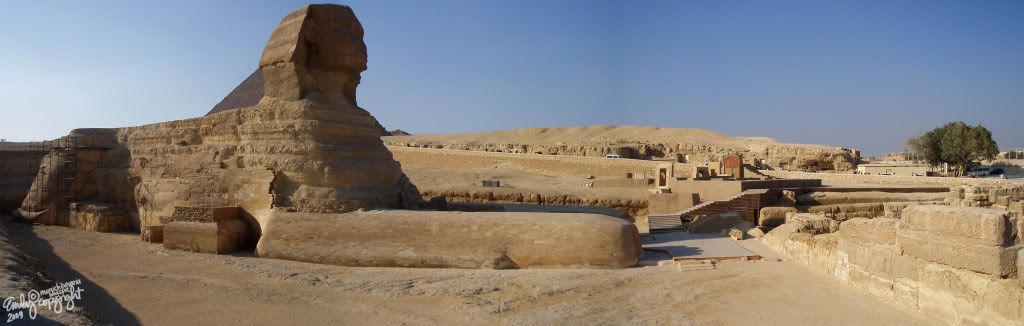 The Sphinx itself is undergoing some restoration thanks to UNESCO. The proportions looks a bit off, so it most likely has undergone restorations in the past as well. We saw several young children selling postcards and taking photos of tourists or positioning them for photos so their faces would line up with the Sphinx. Even the youngest are well versed in selling things. It made me stop and think about how drastically different our childhoods are.
 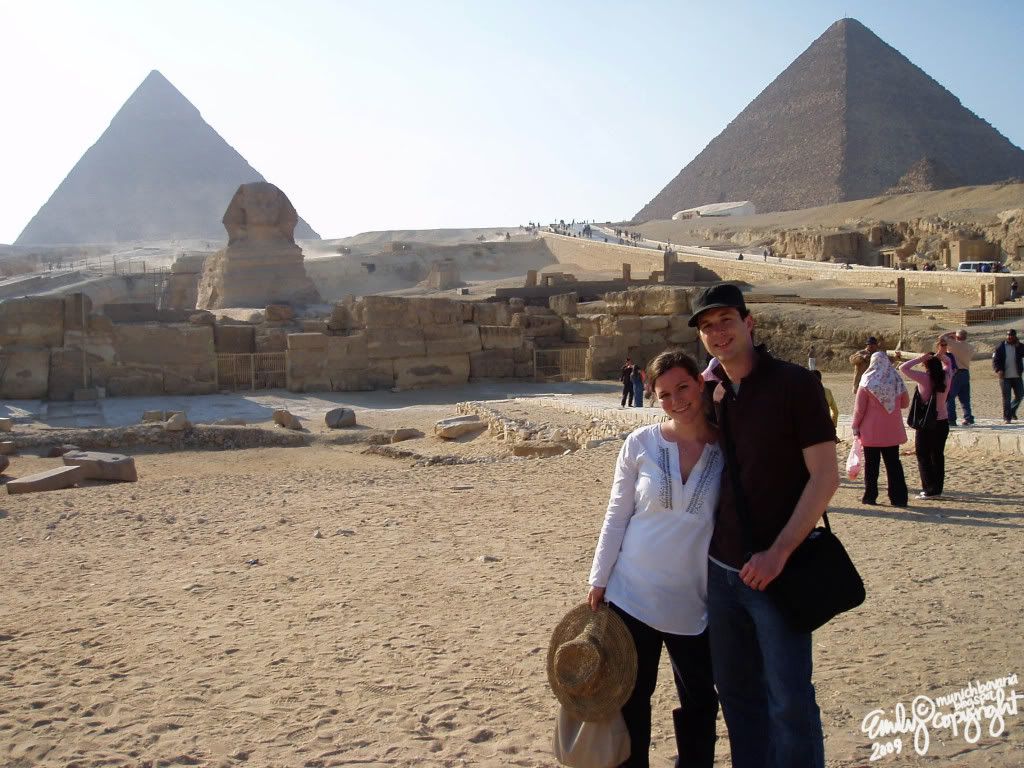 We admired the structures and before we knew it the area was closing. The day passed so quickly and we were very worn out, but we walked away feeling like we'd certainly spent a day of our lives living and learning. These are the moments that I live for.
 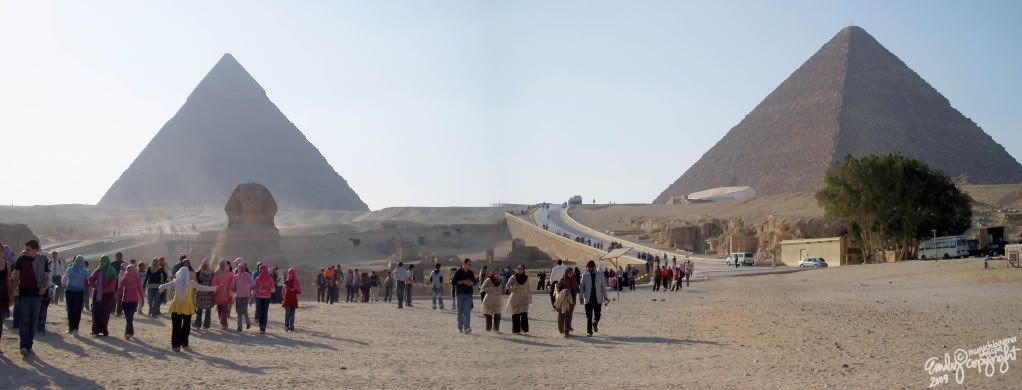 The flood of people came from the Giza complex. The young girls look so expressive with their bright colors, while maintaining their Islamic traditions. I truly cannot imagine what it would be like to grow up as a young Islamic girl. Rani would tell us more about that in the coming days, but as always, I have so much to learn.
 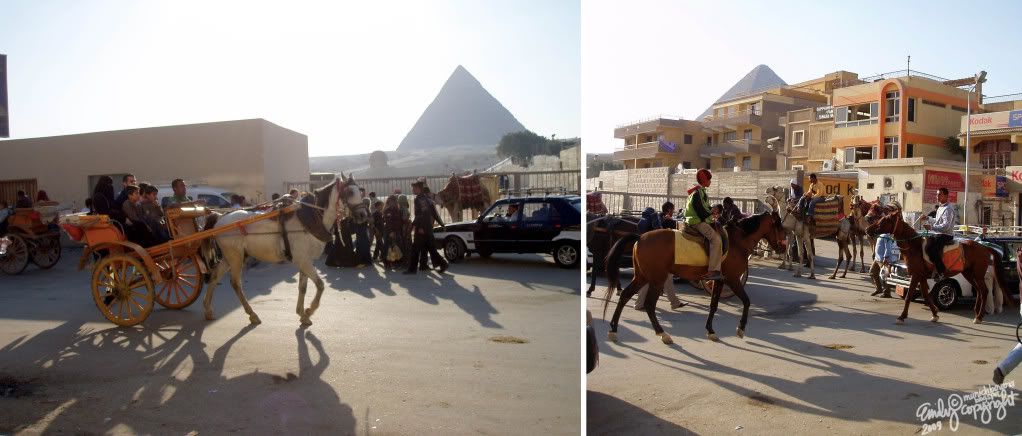 After we left the complex we walked down the street. It is so different to see taxis and cars sharing the streets with horses, donkeys, and camels. The juxtaposition of old and new gave me a lot to think about. Looking at the sophistication of building such monumental structures - and then the stark contrast in how dilapidated and run down most of the city is.
That is something that I really struggled with. The Egyptians that we encountered were highly and impressively educated. There has to be more to it, as to why this once powerful city could fall into such poverty and disarray. It does make me understand how religion is of the utmost importance to many of the people in this amazing area.