Our next stop, after Memphis, was Saqqara. I recall studying this in Art History and being very impressed then, so seeing it was such an incredible experience. The area is a necropoleis, which seems slightly morbid, however it is very grandiose and beautiful.
We passed through many palm trees and then suddenly it was desert sprinkled with pyramids. Imhotep's Step Pyramid is the oldest and most impressive. It was built for King Djoser (c.2667-2648 BC). Simply standing there and looking at such an incredible architectural feat made me appreciate the Egyptian's sophistication and skills in engineering.  After visiting the new Imhotep Museum we ventured up to the pyramid. We were promptly greeted by several stray dogs, one proudly resembled a Sphinx. There were several dogs in the area, hanging around the tourists, but not bothering them. This small puppy looked as though he had a sunburned nose. Living in Egypt seems harsh on everyone.
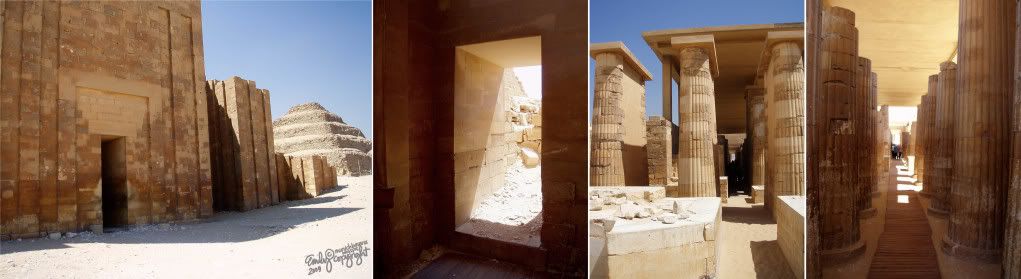 Rani explained some of the history and then we went into the Funerary complex of Djoser. The pillars appeared very organic and I felt as though I was on a movie set as we walked through.
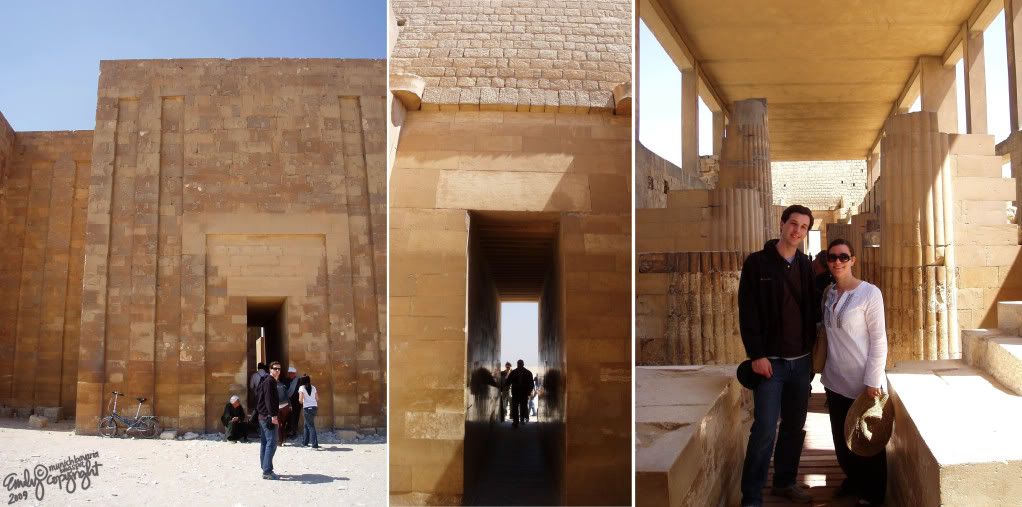 The light and beautiful warm tones made me so happy. Once we entered the Great Court area directly in front of the pyramid, I was simply awestruck.
 The entire complex is so interesting, and then considering it was built so long ago makes it really difficult to comprehend. I was very surprised by the dichotomy throughout this entire trip - from religious and economic aspects to how this culture seemingly went from so progressive to conservative and struggling.
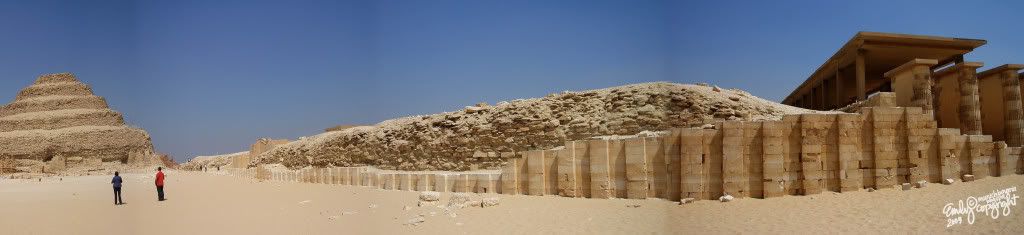
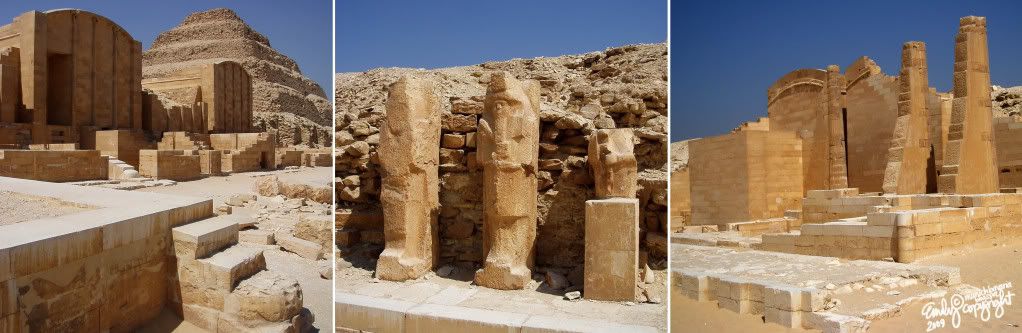 The Saqqara area includes not only the pyramid, but also a larger area used for burials and the Heb-Sed festival, where the King would run to certain points and prove his endurance.
 Not only were we visiting the world's oldest pyramid, we were also going to see the world's oldest graffiti - courtesy of Ramses II. Evidently he really didn't like anything to go without having his name on it, so he wrote on the walls of The South House.
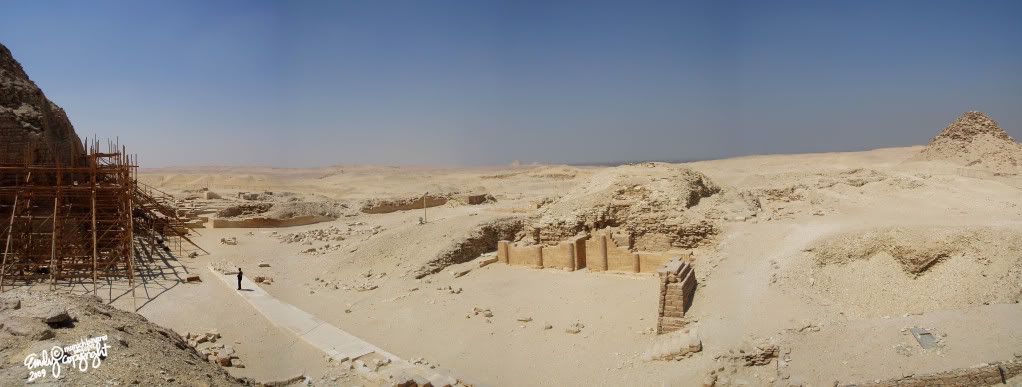 We quickly learned a bit about 'baksheesh' or the traditional bribe/tip that is often given out in Egypt. As we climbed around The South House there was a tourist police officer who was towards the bottom of the pyramid.
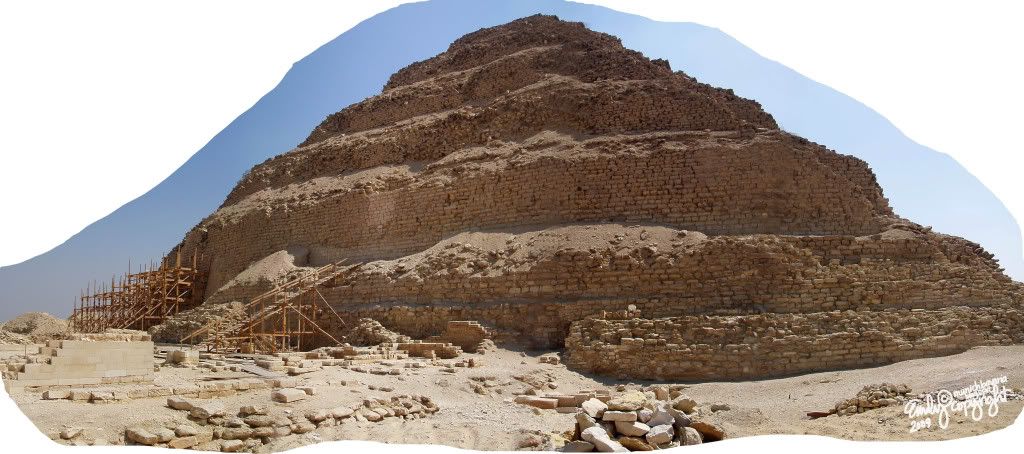 Most of the pyramid was blocked off due to preservation, however he allowed us to go around the back after a quick exchange with Rani.
 Towards the back of the pyramid we were guided towards the Serdab - or 'cellar' in Arabic. When we peered through the holes we were greeted with King Djoser himself staring back at us. The original is in the Egyptian Museum, which we would later see, however the Serdab itself is the original. Since so much was based on the after life during this time, King Djoser was aligned to look towards the North Star and the holes were made so he would be able to see the rituals and offerings.
We seem to have a lot of luck with people telling us about secret peep-holes, like the one we saw in Rome. I love that extra attention to detail.  We looked down one of the entry shafts. In the Imhotep musem we were able to see some of the beautiful faïence tiles that were used in some of the burial chambers (sorry, photos weren't allowed). The blue-green hue is most likely due to the belief that life comes from water.
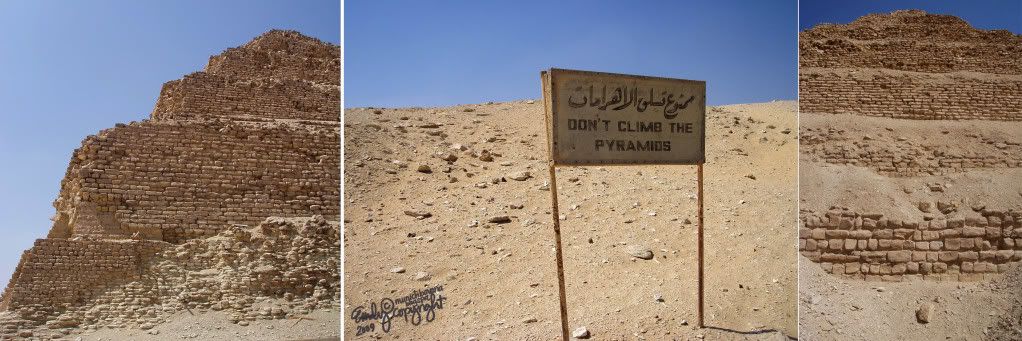 They say "Man fears time, But time fears the pyramids", but in the meantime they are doing a lot of preservation work as well. It's very amazing and humbling to consider how much people are capable of - in creating or destroying.
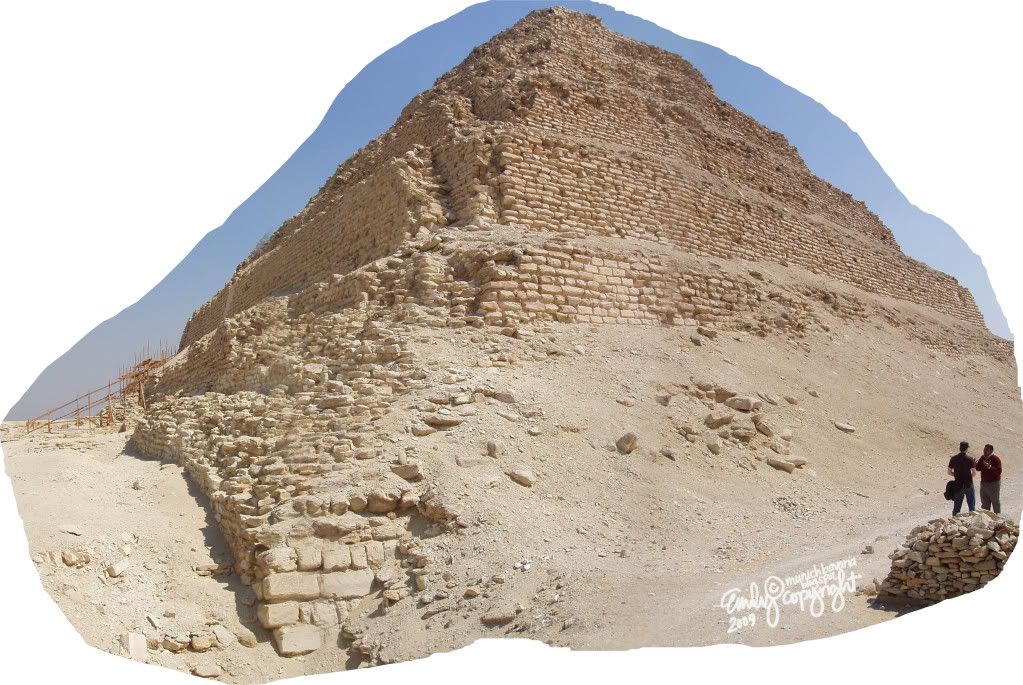 It was nice to experience some of the solitude and calmness while we were there on our own. I really couldn't help but wonder what else is buried underneath the sands.
Rani also added to our pop culture knowledge by telling us that Indian Jones was filmed here.
The afternoon heat was starting to warm up and I could only imagine what the people went through to build these structures, which obviously took a lot of time. We were reminded time and time again that they were not created by slaves, especially taking into account the precision and attention to detail that was required to withstand the test of time.  Again, it made some of the scaffolding and restoration tools seem rather archaic. It also made our modern buildings seem so temporary and boring. The brut strength to create these pyramids - gathering natural materials, creating the pigments, transporting things, and making them structurally sound, is very incredible.
 Many areas have not been fully excavated simply because there is so much to look at and categorize. It's a wonderful place to be an archeologist!
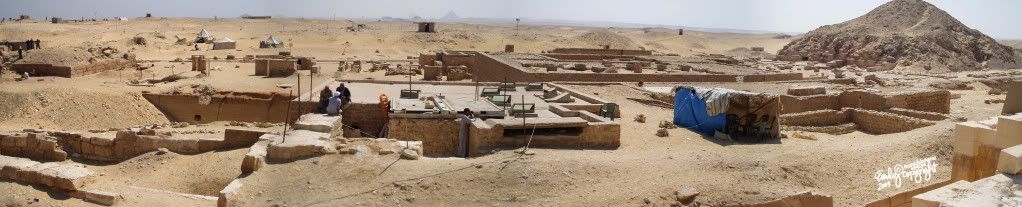 The Step Pyramid is not the only pyramid in the area. Sadly. some of the pyramids aren't as elaborate - after all, not all could be fit for the King! Erosion has worn some of them down to resemble hills, like the pyramid of Unas (pictured above and below), from the Fifth Dynasty.
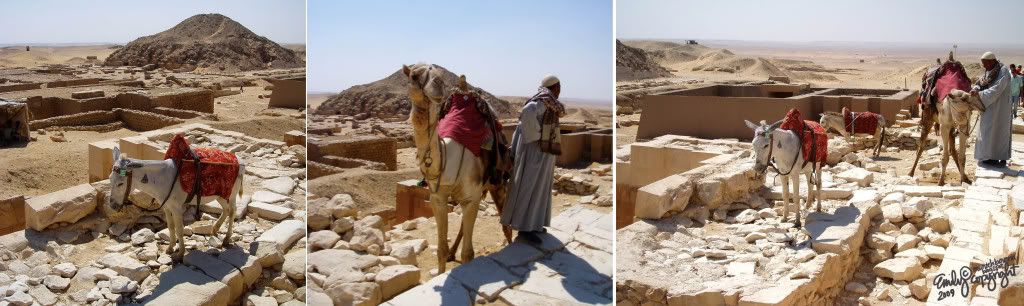 While we opted not to ride a camel or donkey, I still think they are absolutely precious and so Mid-East.
Saqqara was one of my favorite places during our entire trip. I really appreciated its isolation and complexity.
Showing posts with label Saqqara. Show all posts
Showing posts with label Saqqara. Show all posts
Sunday, March 22, 2009
Saqqara - سقارة

Subscribe to:
Posts (Atom)